
Building in Kenya? Learn whether to engage an architect, interior designer, or contractor first, and how sequencing protects your budget and timeline.
You have the land. You have a budget. You’re ready to begin.
The question most homeowners don’t anticipate is this: Who should you call first?
For many Kenyans, the instinct is straightforward — find a contractor. Contractors build houses. You want a house built. It feels logical.
Others assume the answer is simple: start with an architect. After all, architects design buildings. That must mean the process is “design-led.”
But here’s where confusion often begins.
Design-led does not mean architect-only. And contractor-first does not automatically mean efficiency. The real issue is not which profession is superior — it is how and when each enters the process.
As residential projects in Kenya grow more complex, sequencing has become the silent variable that determines whether a build feels controlled or reactive.
Inflation and material pricing are part of the story. But more often, the underlying issue is structural: the order in which professionals are engaged.
Sequencing determines outcomes.
Why Contractors Are Often Engaged First
The contractor-first approach is not irrational. It reflects how construction has traditionally operated in Kenya.
Contractors are visible. Their work is easy to see across neighbourhoods. Referrals are straightforward.
The relationship feels direct — you want to build, and they can start.
There is also comfort in immediate cost discussion. A contractor can visit your site and provide a rough estimate quickly.
That number, even if provisional, creates movement. It feels like progress.
Design work, by contrast, appears abstract. Architectural drawings look like paperwork. Interior design is often misunderstood as aesthetic enhancement rather than spatial coordination.
Engineering and quantity surveying feel technical and removed from the physical act of building.
Construction activity is tangible. Walls rising feel productive. Design documentation feels like a delay.
But visible activity is not always structural progress.
When execution begins before documentation is fully resolved, decision-making shifts into the most expensive stage of the project — the construction phase itself.
What Happens When Construction Starts Before Design Is Complete
Consider two common project paths. Both involve the same professionals eventually. The difference is when they enter the process.
Path One: Execution-First Sequencing
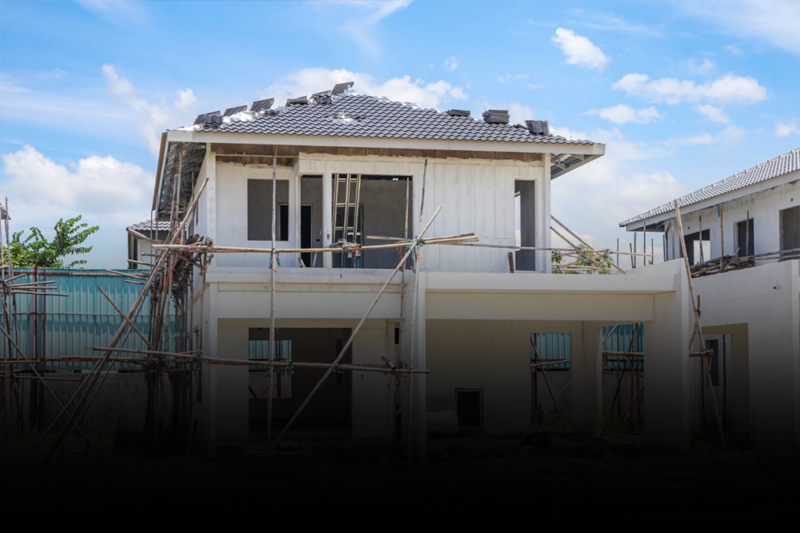
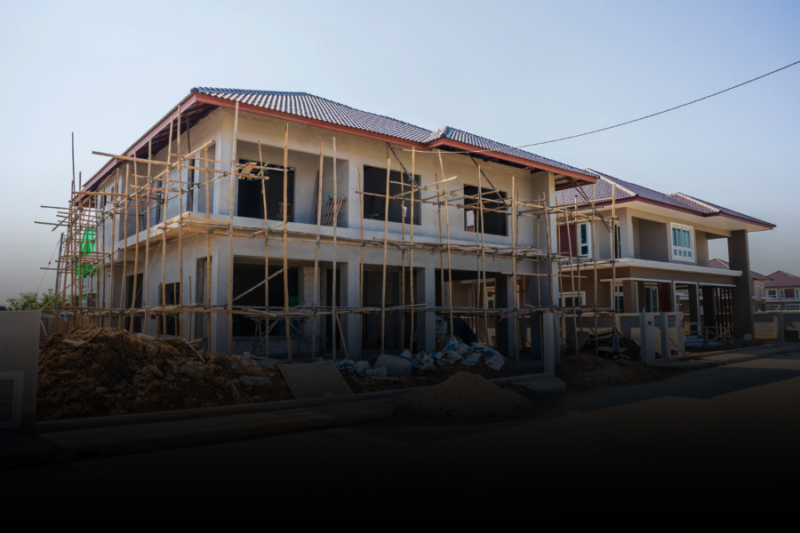
A contractor is engaged. Site clearing begins. Foundations are poured.
Architectural drawings are developed primarily for approval rather than for full coordination. As construction advances, spatial realities become clearer.
The kitchen feels smaller than expected. Window placements affect furniture layout. Staircase positioning alters circulation.
Interior designers are engaged later — often after masonry and plastering. At this stage, structural decisions are fixed.
Kitchen layouts require plumbing relocation. Electrical points are insufficient. Ceiling finishes do not accommodate lighting plans. Built-in wardrobes conflict with structural wall depths.
Adjustments become rework. Rework introduces cost. Rework extends timelines.
Not because professionals are incapable — but because coordination occurred after commitment.
Path Two: Design-Led Sequencing
In a design-led process, architectural, structural, and interior planning are resolved before construction begins.
Layouts are tested and refined. Kitchen and bathroom configurations are coordinated with plumbing and electrical plans. Lighting design informs ceiling detailing.
Built-in furniture dimensions are embedded into structural planning. Material selections are aligned with budget frameworks.
When contractors mobilise, they execute defined documentation rather than evolving decisions.
Challenges may still arise — no project is frictionless — but the scale and frequency of reactive changes reduce significantly.
The difference between the two paths is not talent.
It is order.
Where the Gap Becomes Most Visible
The contrast between these two approaches becomes most apparent during interior coordination.
In many Kenyan residential projects, interior designers are introduced after structural and masonry work is complete. By then, ceilings are plastered, plumbing is fixed, and electrical routing is installed.
What follows is not creative refinement — it is structural adjustment.
Kitchen islands lack service provision. Switch positions conflict with furniture layouts. Ceiling heights restrict lighting options. Bathroom fittings require pipe repositioning.
A common example involves kitchen islands added after slab completion. Without early coordination, electrical conduits, plumbing, or gas lines may not exist in the slab.
Installing them later requires cutting finished floors, rerouting services, and repairing surfaces that were already completed — a change that would have been resolved easily during design documentation.
These issues do not arise from poor workmanship. They arise from delayed sequencing.
Interior design is not decoration layered onto a finished structure. It is spatial and technical planning that should inform construction decisions before they are locked in.
When integrated early, interior planning strengthens architecture. When introduced late, it must adapt to it.
Understanding where sequencing breaks down requires looking at how each professional contributes — and when their input carries the most impact.
Professional Roles Are Complementary — Timing Is the Difference
Architects define spatial structure and regulatory compliance.
Engineers ensure safety and technical performance.
Interior designers coordinate functionality, material integration, and user experience.
Quantity surveyors align cost with the defined scope.
Contractors execute construction and manage site delivery.
All are essential.
Inefficiency does not arise from participation. It arises from engagement without structure.
Changing a wall position on paper requires hours. Changing it on-site requires demolition.
Early coordination is inexpensive. Late adjustment is disruptive.
The goal is not to elevate one profession above another. It is to allow each to perform optimally within a disciplined process.
If order determines efficiency, the practical question becomes: how should a residential project be structured from the outset?
How to Structure Your Residential Project Correctly
Clarity begins with phased engagement rather than simultaneous mobilisation.
1. Develop a Clear Brief
Define how you intend to live in the space. Document room requirements, lifestyle priorities, budget parameters, and timeline expectations. This brief guides every design decision that follows.
2. Complete Architectural and Structural Design
Resolve layouts, circulation, elevations, and structural systems. Secure regulatory approvals. At this stage, the project’s spatial framework must be stable and coordinated.
3. Integrate Interior Planning Before Construction
Before masonry begins, finalise:
● Kitchen and bathroom layouts
● Built-in furniture dimensions
● Lighting design and ceiling plans
● Electrical and plumbing positions
● Material specifications that influence construction sequencing
This is construction coordination, not decorative styling.
4. Align Costs to Defined Documentation
Once drawings are coordinated, detailed costing becomes reliable. Pricing a moving target invites variations. Pricing a resolved design protects predictability.
5. Engage Contractors for Execution
Mobilise construction teams when the scope is clear. Contractors perform best when executing coordinated documentation rather than improvising solutions on site.
If documentation feels incomplete, mobilisation is premature.
Clarity before commitment reduces conflict during construction.
The Order Determines the Outcome
Kenya’s residential sector is not short on ambition. Across Nairobi and beyond, homeowners are building larger, more considered homes than ever before.
The difference between projects that feel controlled and those that feel chaotic rarely comes down to talent or effort. It comes down to structure.
When documentation precedes demolition, when coordination precedes commitment, and when cost alignment precedes mobilisation, construction becomes less reactive and more predictable.
As the market matures, success will not be defined by how quickly ground is broken — but by how clearly the project was resolved before it began.
The real decision is not which professional is most important.
It is whether the project begins with structure — or with assumption.
Frequently Asked Questions
When should I hire an interior designer?
Ideally, interior designers should be engaged during the planning phase before construction begins.
Early involvement allows kitchen layouts, lighting design, electrical points, and built-in furniture dimensions to be coordinated with architectural and structural plans, reducing the need for costly adjustments once construction has started.
If I start with an architect, isn’t that already design-led?
Starting with an architect is a strong first step. A fully design-led process also integrates interior and engineering coordination before construction begins, ensuring functionality and systems alignment are resolved early.
Can I work with a contractor who has in-house design professionals?
Yes — provided qualified professionals are genuinely involved during the planning phase and documentation is completed before construction begins.
Is engaging multiple professionals too expensive?
Upfront coordination may increase planning costs, but it often reduces the financial and emotional cost of late-stage rework.
What if construction has already begun?
Pause at the next logical stage and complete outstanding documentation before proceeding. Coordinating midstream is preferable to repeatedly adjusting completed work. Residential construction is one of the largest investments most families make.