
Electrical safety in Kenyan homes is a subject that demands attention beyond the occasional flickering light or tripping breaker. Every year, a significant number of residential fires across Kenya’s urban centres are attributed to electrical faults, many of which displayed warning signs that were ignored or misunderstood in the weeks or months preceding the incident.
This guide explains the specific warning signs that indicate your home’s electrical system requires immediate professional inspection and repair.
It is written for Kenyan homeowners living in the full range of residential housing, from older concrete estates in Nairobi’s Eastlands to newer townhouses in Syokimau and Ruaka, all of which face different but equally relevant electrical safety challenges.
Understanding Kenya’s Residential Electrical Context
Kenya’s residential electrical infrastructure reflects more than six decades of different building standards, material quality, and installation practices. Homes built before 1990 may contain rubber-insulated wiring that has become brittle and prone to cracking.
Properties built in the 1990s and 2000s often contain PVC-insulated cables that meet minimum standards but were not necessarily installed by qualified electricians, particularly during the construction boom in satellite towns around Nairobi.
The challenge is compounded by Kenya Power’s distribution infrastructure, which generates frequent voltage fluctuations, surges during switching operations, and spikes when supply is restored after load shedding or faults.
These electrical stresses accelerate the deterioration of ageing wiring and place particular strain on protective devices such as MCBs (Miniature Circuit Breakers) and ELCBs (Earth Leakage Circuit Breakers).
Warning Sign 1: Frequently Tripping Circuit Breakers
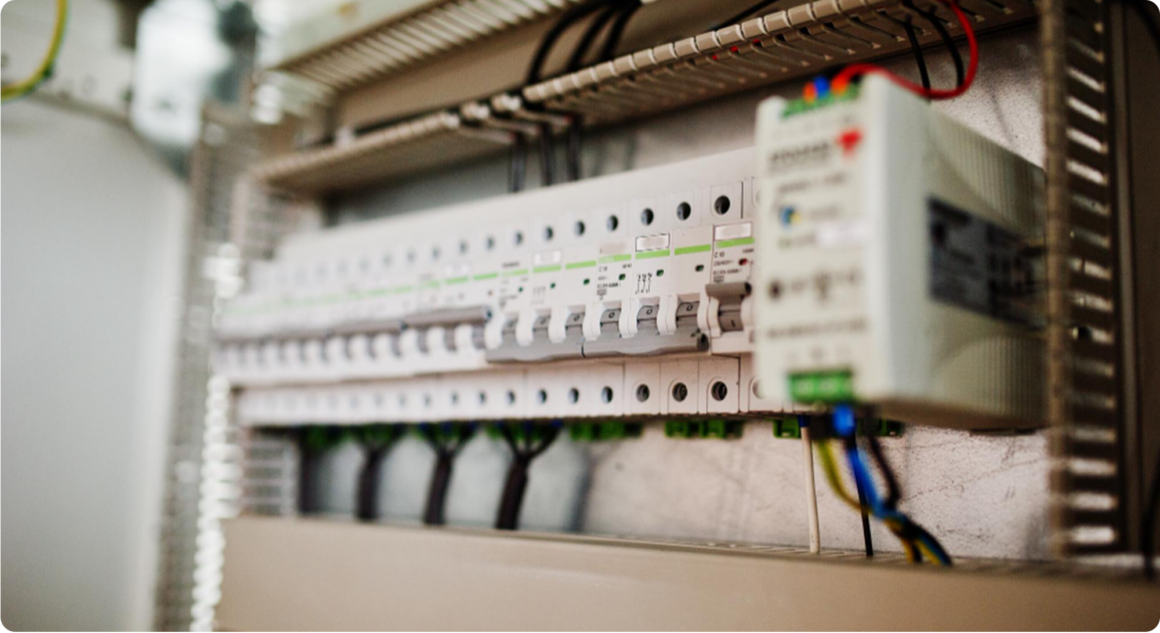
A circuit breaker that trips once after you connect a high-draw appliance is doing its job. A circuit breaker that trips repeatedly (particularly on the same circuit, or on multiple circuits simultaneously) is signalling an underlying fault that must be investigated by a certified electrician.
Repeated tripping can indicate a circuit that has been overloaded relative to its original design (common as appliance use increases in homes with older wiring), a developing short circuit in fixed wiring or in an appliance connected to the circuit, or a ground fault where current is leaking to earth through an unintended path.
Each of these conditions worsens over time if left unaddressed.
Important: If you reset a breaker and it trips immediately again, this is a sign of an active fault, not a transient overload.
Do not repeatedly reset a breaker under these conditions. Disconnect all appliances on that circuit and call an electrician before restoring power to it.
Warning Sign 2: Flickering, Dimming, or Inconsistent Lights
Lights that dim noticeably when a large appliance starts (such as a refrigerator compressor, an air conditioner, or a submersible pump) indicate that the circuit supplying those lights does not have adequate capacity separation from high-load circuits.
This is a common wiring design issue in older Kenyan homes and can be resolved by a qualified electrician redistributing loads across circuits.
However, lights that flicker persistently on multiple circuits, or that dim and brighten independently of appliance activity, indicate a more serious issue: a loose connection on the main supply to the property, a failing neutral conductor, or a problem with the incoming supply from Kenya Power.
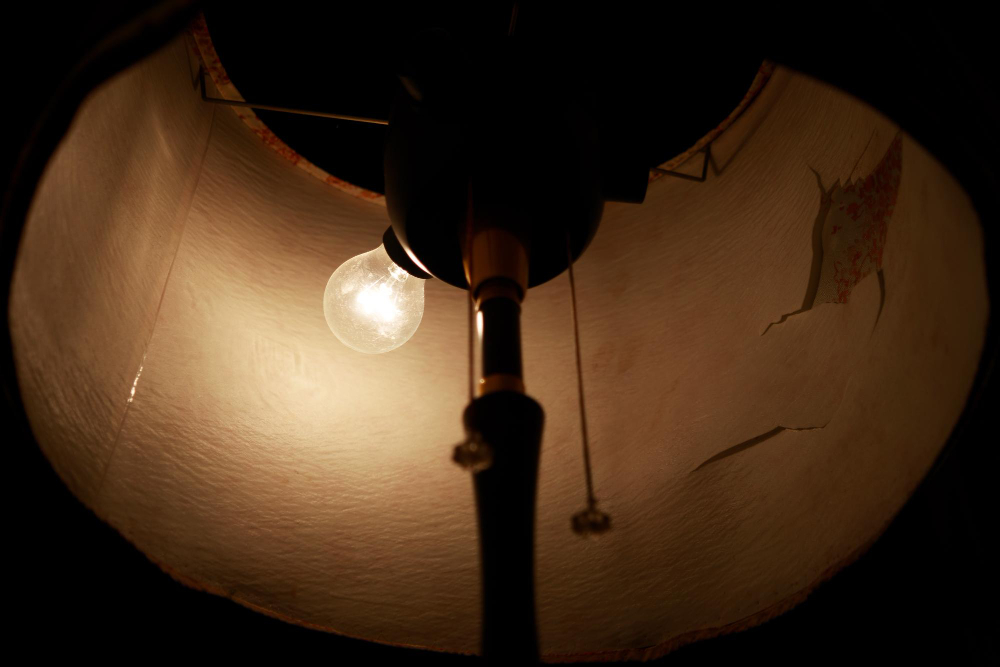
This type of fault can cause damage to appliances across the entire home and should be reported to both a certified electrician and KPLC.
Single-light flickering in LED fittings may simply indicate a dimmer compatibility issue or a failing LED driver, less serious but still worth addressing to avoid premature fitting failure.
Warning Sign 3: Burning Smell or Scorch Marks
A burning smell from any electrical outlet, switch plate, appliance, or the Consumer Unit is a pre-fire warning that requires immediate action. Burning indicates that heat is being generated at a connection point, typically from a loose terminal, overloaded cable, or arcing (where electricity is jumping a small gap in a damaged circuit).
Visible scorch marks or discoloration around socket faceplates confirm that significant heat has already been generated at that location. The socket or switch must be switched off at the circuit breaker and not used until replaced by a qualified electrician.
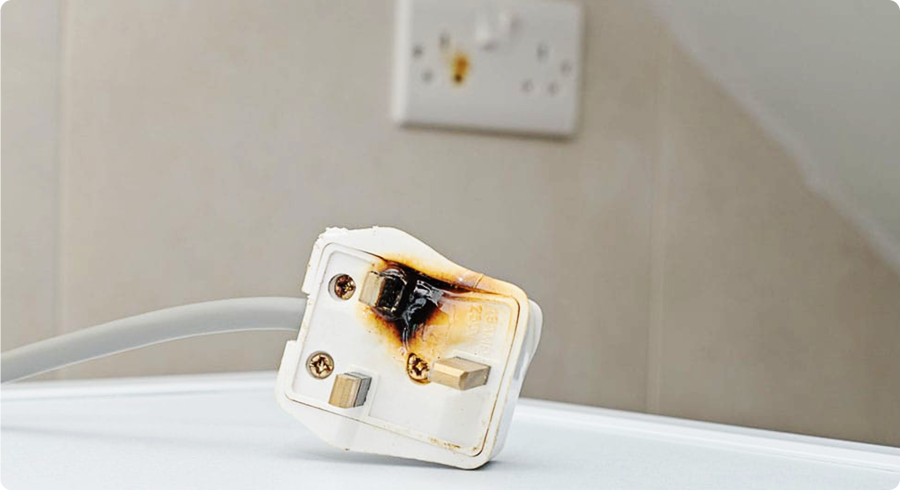
Do not assume that because the burning smell has stopped, the fault has resolved, heat damage to wiring insulation within a wall continues to increase fault risk even after the immediate heat source cools.
In the event of a burning smell from the Consumer Unit itself, switch off the main breaker and call an electrician as an emergency. A burning Consumer Unit indicates a fault that is a direct fire precursor.
Warning Sign 4: Shocks from Switches, Sockets, or Metal Appliance Surfaces
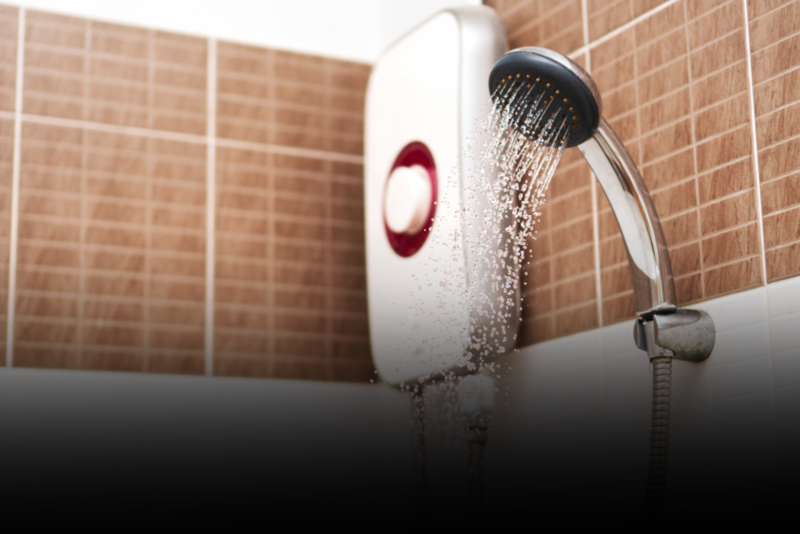
Receiving a tingle or shock when touching a metal light switch, socket faceplate, or the metal casing of an appliance such as a washing machine, refrigerator, or geyser is never normal and should never be dismissed.
This phenomenon (sometimes described as ‘the appliance is live’) indicates one of three conditions: faulty earthing of the appliance, a wiring fault causing voltage to appear on metalwork that should be earthed, or a failure of the home’s earthing system.
In Kenya, earthing failures are more common than in some other countries due to the prevalence of dry, high-resistance soil in areas such as Nairobi’s highland suburbs, the use of rod electrodes that corrode over time, and the deterioration of earthing conductors in older properties.
An electrician should test earth continuity and loop impedance as part of any electrical inspection.
Warning Sign 5: Buzzing, Crackling, or Humming Sounds
Electrical wiring, circuit breakers, and switches should be silent in normal operation. Buzzing from fluorescent lights is a common and relatively benign issue (usually indicating a failing starter or ballast). However, buzzing or crackling from the Consumer Unit, from behind wall surfaces, from socket outlets, or from wiring in a roof void is a serious warning sign.
These sounds indicate arcing, where electricity is crossing a gap in a damaged circuit, similar to a continuous small spark. Arcing in an enclosed space such as a wall cavity or roof void can ignite surrounding materials.
If you hear these sounds, do not wait. Identify which circuit the sound appears to be coming from, switch it off at the Consumer Unit, and contact a certified electrician.
Warning Sign 6: Warm or Hot Socket Outlets
Socket outlets may feel slightly warm to the touch when a high-draw appliance such as an iron or kettle is connected. However, a socket that feels hot, or that is warm even when nothing is connected to it, indicates an internal fault, typically a loose or corroded terminal that is generating heat as current passes through a high-resistance connection.
This is a direct fire risk. Switch off the circuit at the breaker, do not use the socket, and have it replaced by an electrician.
In Kenya, socket quality is highly variable. KEBS-certified sockets from reputable suppliers perform significantly better and more safely than low-cost imports from informal markets.
Protecting Appliances from Kenya Power Voltage Fluctuations
Kenya Power’s supply voltage is nominally 240V at 50Hz but in practice fluctuates significantly, particularly in areas at the end of long distribution lines, during peak demand hours, and in the period immediately after power is restored following an outage.
These fluctuations cause progressive damage to sensitive electronic components in televisions, computers, refrigerators, microwave ovens, and air conditioning units.
Beyond whole-home surge protection at the Consumer Unit, individual appliance protection using quality surge-protected extension boards provides a second layer of defence for high-value electronics.
When purchasing surge protection equipment in Kenya, choose products that carry KEBS certification rather than relying solely on price as an indicator of quality.
Uncertified surge protectors (widely available in informal markets) may provide no actual protection despite their appearance.
If you experience repeated appliance failures that cannot be explained by the age of the equipment, commission an electrician to measure the supply voltage at your property over a 24-hour period.
This diagnostic step can identify whether you are receiving consistently under- or over-voltage from KPLC, which can be reported and actioned through official channels.
Frequently Asked Questions: Electrical Safety in Kenya
Q: What are the most dangerous electrical faults in Kenyan homes?
A: The most dangerous electrical faults in Kenyan homes include arcing faults in concealed wiring, failed or absent earth leakage protection, overloaded circuits in properties with ageing wiring, and corroded or loose connections at the main Consumer Unit. All of these can cause fires or fatal electric shocks.
Q: How do I know if my home’s wiring is safe in Kenya?
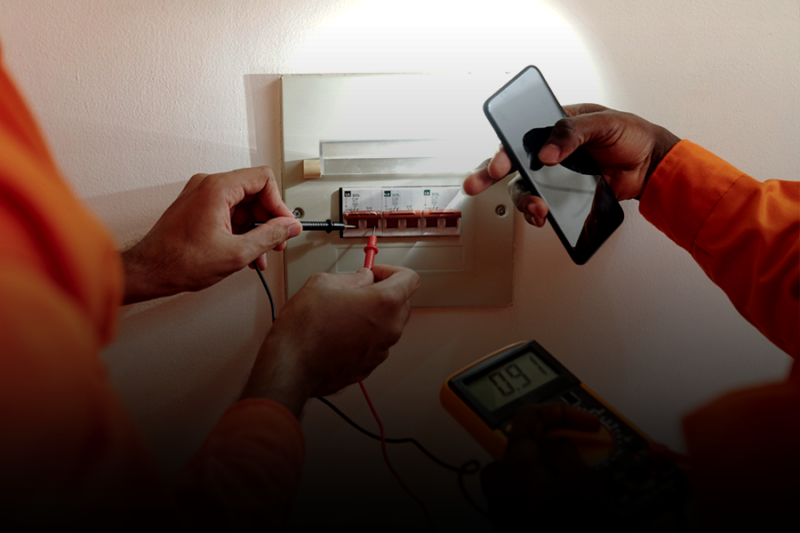
A: The only reliable way to confirm that your home’s wiring is safe is through a professional electrical inspection by a certified electrician. Visual signs of safe wiring include intact, unscorched socket and switch plates, a Consumer Unit with MCBs (not fuse wire), a functioning ELCB, and the absence of any of the warning signs described in this article.
Q: What should I do immediately if I smell burning from electrical fittings?
A: If you smell burning from an electrical fitting in Kenya, switch off the circuit breaker for the affected circuit, do not use the fitting, and call a certified electrician. If the smell persists after switching off all circuits, evacuate the property and call emergency services. The fault may already be causing concealed smouldering.